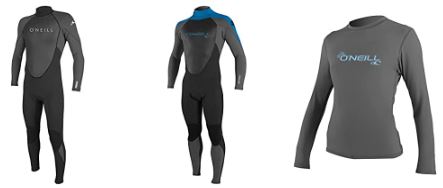
If you love kayaking, surfing, diving, or any kind of water adventure, one essential piece of gear you’ll quickly learn to appreciate is the wetsuit. It’s more than just tight rubber clothing — it’s your personal temperature regulator, your protection against the elements, and often the difference between comfort and cold.
As someone who spends a lot of time paddling in both tropical and cooler waters, I can tell you a properly fitted wetsuit transforms your experience. It keeps you warm, flexible, and safe — but only if you understand how it works, how to choose the right size, and how to care for your best wetsuit.
In this article, we’ll dive into everything you need to know about wetsuits: from what they are and what to wear under them, to how to clean, dry, and maintain them for long-term use.
Table of Contents
What is a Wetsuit?
A wetsuit is a tight-fitting garment made primarily of neoprene, a synthetic rubber filled with millions of tiny air cells that trap heat and provide insulation. Worn by surfers, kayakers, divers, and swimmers, its main purpose is to keep you warm and protected while you’re in or on the water.
The suit doesn’t keep you completely dry—a thin layer of water seeps between your skin and the neoprene, which your body then warms. This small layer, combined with neoprene’s insulating properties, minimizes heat loss. Beyond thermal protection, wetsuits also offer buoyancy, UV protection, and abrasion resistance, making them indispensable for anyone regularly engaging in water sports.
Does a Wetsuit Keep You Warm?
Yes, a wetsuit does keep you warm — though not by keeping you dry. Instead, the neoprene traps a thin layer of water between your skin and the suit. Your body heat warms this trapped layer, and because neoprene is an excellent insulator, the warmth stays close to your body.
The thicker the neoprene, the warmer you’ll stay. For example:
2mm–3mm wetsuits are ideal for warm water (above 20°C).
4mm–5mm wetsuits suit cooler conditions (10–18°C).
6mm+ wetsuits are used for very cold waters (below 10°C).
If you’re kayaking or paddling, choose a wetsuit that balances warmth with mobility — thicker suits are warmer but can restrict movement.
How Does a Wetsuit Work?
The science behind wetsuits is simple yet fascinating. Neoprene’s closed-cell foam structure contains air bubbles that act as insulation, reducing heat loss through conduction. When you enter the water, a small amount of water enters the suit, stays trapped, and warms up from your body heat.
The key factor is fit — too loose, and cold water flushes in and out; too tight, and you’ll restrict circulation and movement. A properly fitted wetsuit minimizes water exchange while maintaining flexibility, allowing you to paddle or swim comfortably.
How Tight Should a Wetsuit Be?
A wetsuit should feel snug but not suffocating. It should fit like a second skin, with minimal wrinkles or air gaps.
Here’s a quick fit checklist:
No loose areas around your lower back, armpits, or knees.
The suit should restrict only slightly when you move — you should still be able to paddle and stretch.
Zippers and seals should close securely without pulling uncomfortably.
Remember, neoprene loosens slightly after a few uses, so a new wetsuit should feel tight at first.
If you can squat, raise your arms, and twist your torso without major discomfort, you’ve likely found your perfect fit.
What Size Wetsuit Am I?
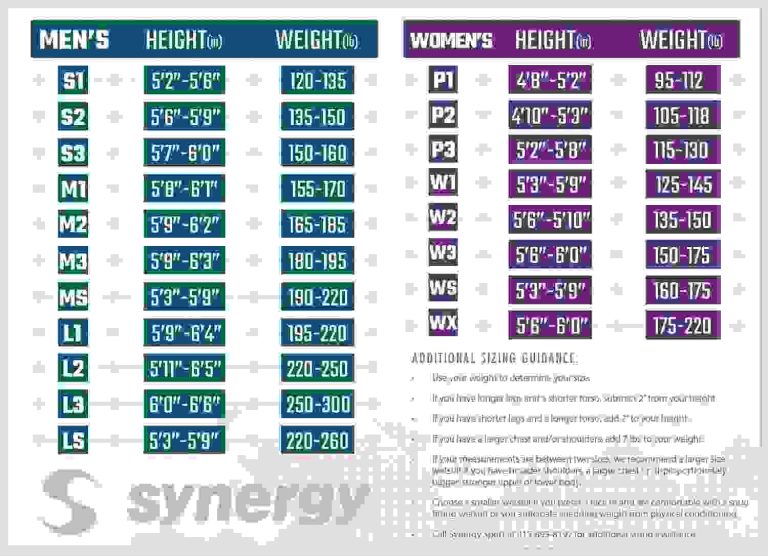
Finding your correct wetsuit size depends on your height, weight, chest, waist, and hip measurements. Every brand has its own sizing chart, so never assume that “medium” means the same across all manufacturers.
Tips for choosing your size:
Measure carefully and check the brand’s official chart.
If you’re between sizes, opt for the slightly smaller one (within reason) since neoprene stretches over time.
Try it on and move naturally — bend, squat, paddle, and twist to ensure freedom of movement.
Comfort and flexibility are key, especially for activities like kayaking where upper body movement is constant.
What to Wear Under a Wetsuit
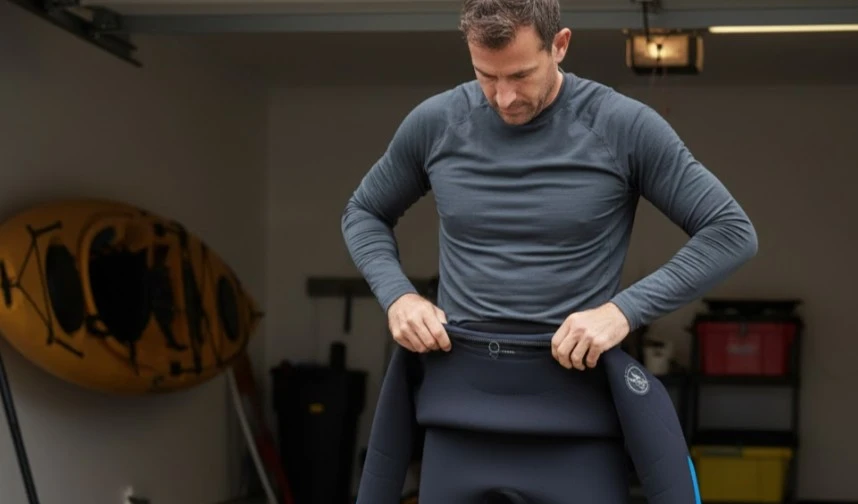
What you wear under a wetsuit depends on the water temperature, comfort, and personal preference.
Warm Water Conditions
In tropical or warm waters, you can wear:
A swimsuit, bikini, or swim trunks.
A rash guard or tight compression top to prevent chafing and add UV protection.
Cool or Cold Water Conditions
In colder water, layering helps:
Thermal base layers made from polypropylene or fleece for added warmth.
Neoprene vests or shorts for insulation.
Avoid cotton or baggy clothing under a wetsuit—they trap water, reduce warmth, and can cause discomfort.
For kayaking, I prefer a lightweight thermal top and leggings under my wetsuit in cooler weather. It adds warmth without restricting motion.
Can You Pee in a Wetsuit?
Technically, yes—you can. But should you? Probably not if you can avoid it.
Peeing in your wetsuit may feel warm for a moment, but urine can degrade neoprene and cause odor if not rinsed properly. It’s also not hygienic, especially if you share or rent the suit. If you must, rinse the suit thoroughly afterward with fresh water and mild wetsuit shampoo.
How to Wash a Wetsuit
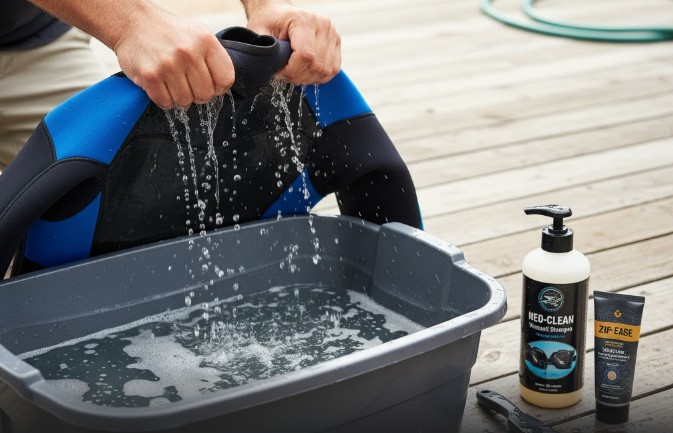
Proper cleaning keeps your wetsuit fresh, flexible, and long-lasting. Here’s how:
Rinse with cold or lukewarm fresh water after every use to remove salt, sand, and sweat.
Turn it inside out to clean the interior, then rinse the exterior.
Use a wetsuit shampoo or mild detergent occasionally (never bleach or hot water).
Gently squeeze excess water out — don’t wring it.
Inspect seams and zippers for wear and apply zipper lubricant when needed.
Clean your wetsuit after each session—especially after saltwater use—to prevent damage and odor.
How to Dry a Wetsuit
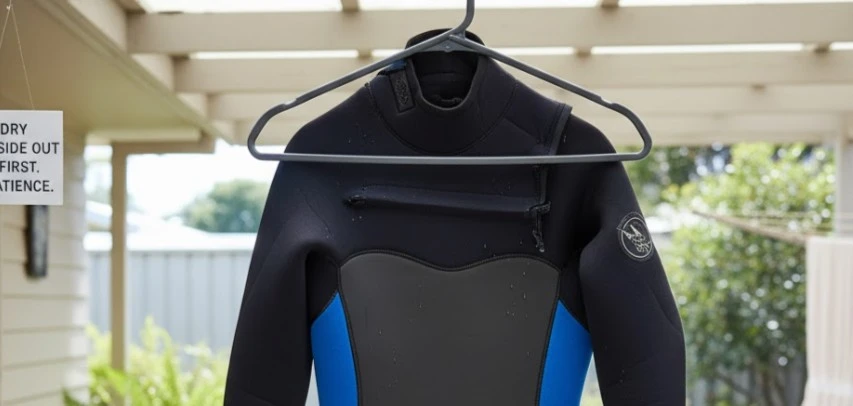
Drying a wetsuit properly ensures it stays flexible and mold-free:
Hang it inside out on a wide plastic hanger in a shaded, ventilated area.
After the inside dries, turn it right-side out to finish drying.
Avoid direct sunlight, heaters, or dryers—they can damage neoprene.
Store it flat or folded over the waist (not the shoulders) to avoid stretching.
Patience is key—natural air drying preserves the suit’s elasticity far better than rushing it.
How Much Does a Wetsuit Cost?
Wetsuit prices vary by brand, material, and intended use:
Entry-level wetsuits (basic neoprene, minimal sealing): $50–$100.
Mid-range wetsuits (better stretch and thermal lining): $150–$300.
High-end wetsuits (premium neoprene, glued seams, hoods): $400–$800+.
For kayaking or general water sports, a good mid-range wetsuit offers the best value — durable, flexible, and warm enough for most conditions. For more prices, have a look on the Amazon.
Conclusion
A wetsuit is more than a piece of gear—it’s your partner on every water adventure. Whether you’re surfing waves, paddling across a lake, or diving into deep blue waters, the right wetsuit keeps you warm, protected, and confident.
Choose a snug fit, wear the right layers underneath, and maintain your wetsuit with proper washing and drying habits. When cared for correctly, a quality wetsuit can last for years, helping you enjoy every paddle stroke and every wave in comfort.
So, the next time you gear up for a kayaking trip or surf session, remember—your wetsuit isn’t just equipment. It’s your second skin against the sea.